
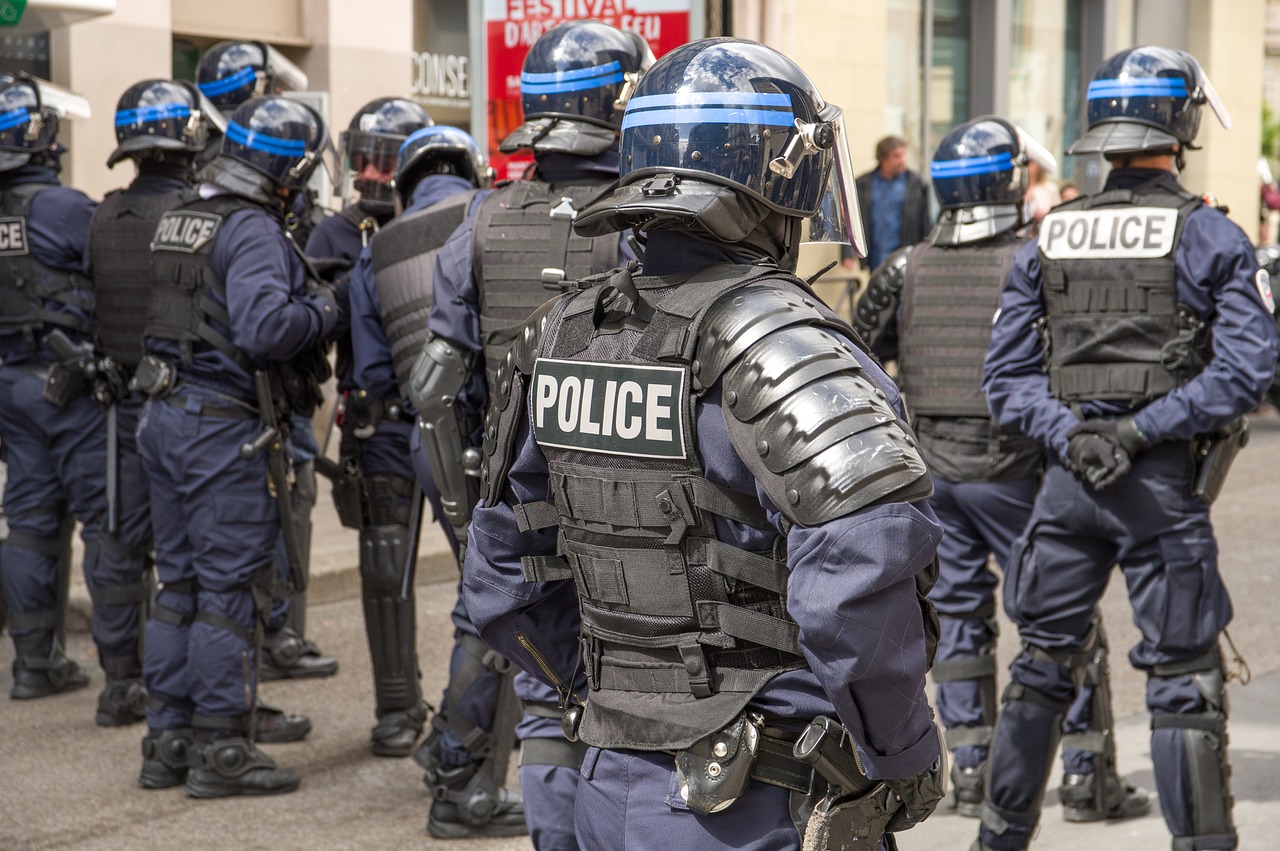
Hey everyone! Welcome back to the blog. Today, we are taking a look at a rather intense weekend of demonstrations that swept across parts of Europe. If you have been keeping an eye on the news, you probably know that European streets have seen a lot of action lately. Recently, things took another dramatic turn as large crowds gathered to voice their frustrations, only for parts of those events to spiral into chaos as evening rolled around.
Let’s dive right into what happened during the latest wave of protests across France. Saturday marked the third weekend of major demonstrations focused heavily on the rising cost of living and what many see as declining public services. Tens of thousands of people took to the streets in places like Paris and Marseille. Interestingly, because the date happened to coincide with the spooky season, some of the demonstrators even showed up in Halloween fancy dress, adding a surreal vibe to the marches.
According to the interior ministry, roughly 320,000 individuals participated nationwide. While that number is actually down from an estimated 410,000 the previous weekend, it is still a massive turnout. In Paris alone, about 70,000 participants marched along boulevards on the south-eastern outskirts, intentionally avoiding the bustling city centre. The interior minister, Laurent Nuñez, noted that around 150 planned events across the country actually went off without a hitch.
However, as day turned to night, the mood shifted drastically. The peaceful gatherings unfortunately attracted groups of masked rioters, much like what happened the weekend before. Security forces were forced to deploy teargas and stun grenades in multiple cities to break up the remaining crowds. The ministry reported that a staggering 565 people were arrested nationwide by late Saturday night. In Paris alone, four police officers and one gendarme sustained injuries during the evening confrontations.
Before things turned violent, the atmosphere in the French capital was defined by clever placards and a heavy police presence. Protesters carried signs with messages like “No need for teargas to make our future look bleak” and “Disguised as an angry citizen for Halloween.” The government wasn’t taking any chances either; Nuñez had previously stated that a massive force of 70,000 police and gendarmes, including elite units, would be deployed to maintain order on what officials anticipated would be a high-risk day.
Unfortunately, those fears were realized near the destination point of the Paris march, Porte de Charenton. Dozens of masked individuals dressed entirely in black used tools like hammers to pry up paving stones, hurling them directly at the police. At least one incendiary device was also thrown at the security forces. Naturally, law enforcement responded quickly with teargas and baton charges to regain control of the streets. The Paris police prefecture described the aggressors as a “hardcore of several hundred rioters.”
Similar scenes played out in other French urban centers. In Lyon, protesters threw various projectiles at officers, prompting another deployment of teargas. Meanwhile, in Toulouse, authorities had to use a water cannon to manage an unauthorized protest that drew thousands of mostly young participants. The coalitions behind these marches are quite broad, bringing together school students who have been demanding better educational conditions for a month, trade unions, and members of the “gilets jaunes” (yellow vests) movement.
Participants are largely united by a deep frustration regarding inflation, widening economic inequalities, and the policies of Emmanuel Macron’s government. One Paris demonstrator, Jérôme Rodrigues, voiced his anger by criticizing the current administration, arguing that families are struggling while the economy is mishandled. Another protester in Nantes, Camille Guérin, emphasized that the crowds were rejecting the rising cost of living and the far right while pushing for a stronger voice for ordinary citizens.
This widespread civil unrest follows closely on the heels of major street violence and looting that shook various French cities on October 17th, marking one of the worst days of civil unrest in recent history. And it looks like things won’t quiet down immediately. Student organizers have already vowed to stage further high school and university blockades, with plans to join a larger demonstration called by workers and trade unions.
France wasn’t the only European nation dealing with unrest, either. Neighboring Germany experienced similar youth-led demonstrations organized by a group called “Gen Z regelt!” (Gen Z will sort it). Thousands of police officers were deployed across German cities as crowds gathered to demand better education, health systems, climate action, and an affordable life. Just like in France, tensions flared as evening approached.
In Frankfurt, Germany’s financial heart, the situation deteriorated to the point where at least two stores were looted, several others suffered damage, and a march had to be temporarily halted after fireworks were set off. Police in Cologne utilized water cannons after protesters targeted officers with fireworks. In Berlin, crowds threw bottles and eggs, while demonstrators in Hamburg set barricades on fire, prompting police to use pepper spray in certain areas.
The wave of public discontent extended even further. In Tirana, the capital of Albania, fresh anti-government demonstrations took place outside the ministry of education, with crowds demanding the resignation of Prime Minister Edi Rama. What started as a peaceful gathering under the rain eventually saw masked youths hurling paving stones and firebombs at police and setting rubbish bins on fire. Authorities were also on high alert in Barcelona and various Italian cities following recent clashes.
My Take on the Weekend’s Unrest
Looking at all these reports coming out of Europe, what stands out the most to me is the sheer predictability of how these events unfold, yet how difficult it seems to be for authorities to prevent the inevitable escalation. According to the official numbers, the vast majority of the people marching are participating in peaceful protests to voice very real, relatable frustrations about inflation and everyday survival. Yet, every single time, a smaller faction of masked agitators hijacks the narrative, turning a legitimate public grievance into a chaotic battleground with law enforcement.
I find it particularly striking how widespread this youthful and cross-generational discontent has become. From students waving placards in Paris and Gen Z activists marching in Germany to demonstrators in Albania, there is a palpable sense of shared anxiety about the future. When young people feel compelled to hit the streets because they cannot afford a decent life or see a bleak outlook ahead, it signals a deep-seated disconnect between citizens and those in power. While violence and property destruction can never be condoned—and the injuries sustained by police officers are deeply unfortunate—the underlying socioeconomic pressures driving hundreds of thousands of people to march are issues that governments simply cannot ignore or sweep under the rug.
As we look ahead to the coming week, with more strikes and blockades planned, the big question is whether authorities will find a better way to protect peaceful demonstrators while isolating the rioters, or if these weekends of tension will simply become the new normal across major European cities. Only time will tell, but one thing is certain: the citizens are not planning to stay quiet anytime soon.
That is all for today’s update, folks. Make sure to stay safe, keep yourselves informed, and I will catch you all in the next post!
source: theguardian.com (www.theguardian.com)