
Hey everyone, welcome back to the blog! Today, let’s dive into some heavy political drama coming straight out of Poland. If you have been keeping an eye on European current affairs, you probably already know that judicial independence and political friction have been major talking points there for quite some time. Well, things just took a pretty intense turn in Warsaw, involving street protests, high-level government decisions, and even law enforcement stepping right into the middle of it all.
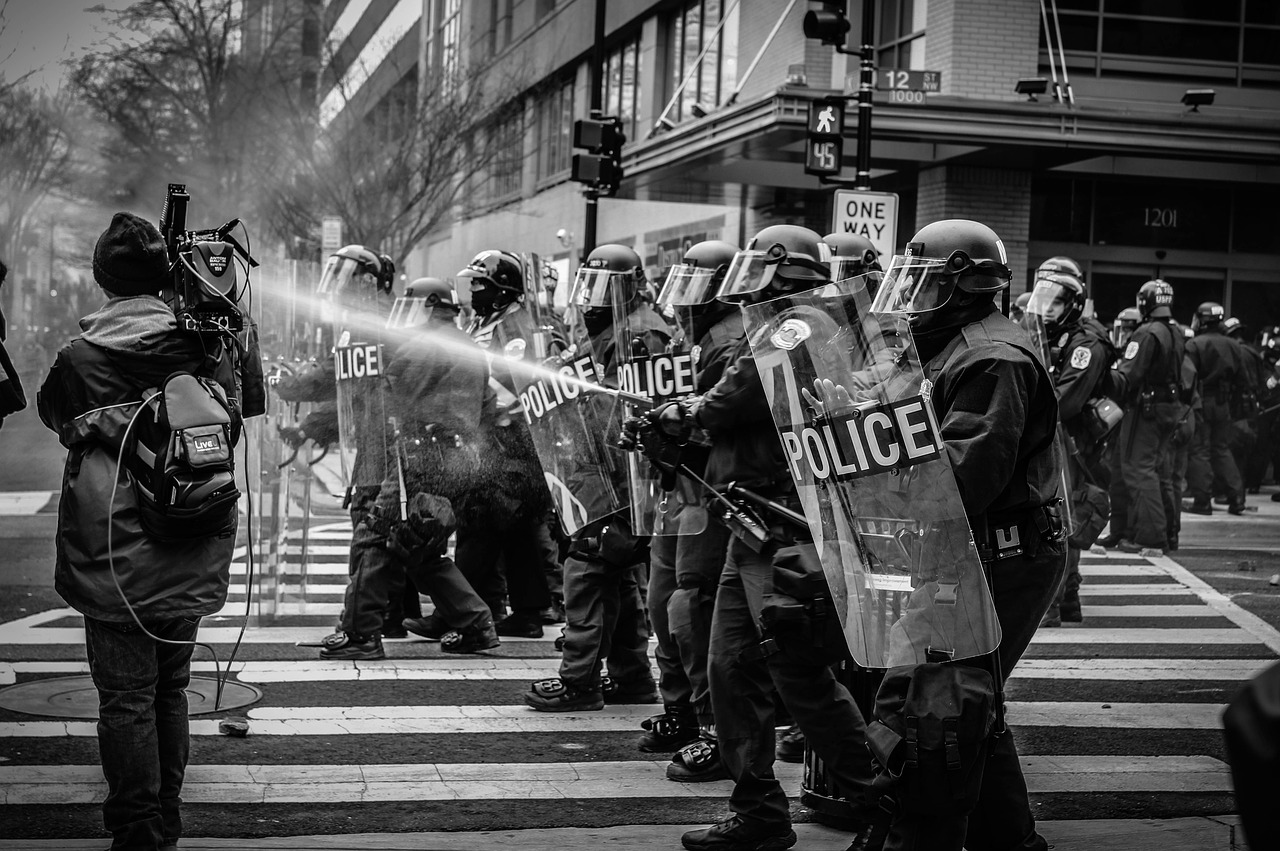
Let’s unpack what is actually going on. Polish police were recently deployed right outside the country’s highest court. Why? Because a crowd of demonstrators gathered to protest a massive piece of news: the suspension of the court’s head judge. According to law enforcement officials, officers ended up entering the premises of the Constitutional Tribunal after things got a bit chaotic outside, with people throwing objects at the police.
The whole reason protesters rushed to the Warsaw court in the first place was the announcement that Bogdan Swieczkowski, the head of the tribunal, had been officially suspended. This suspension is just the latest chapter in a long, exhausting dispute that has essentially left the court paralyzed. Over the past half-year, Swieczkowski had reportedly used his authority as the head of the institution to block judges chosen by the current parliamentary majority from actually taking up their court duties.
Things escalated quickly when Minister of Justice Waldemar Zurek spoke to reporters. He shared that he had formally requested the removal of immunity for both Swieczkowski and his deputy. The reasoning? They allegedly failed to fulfill their duties by actively preventing newly elected judges from doing their jobs.
To understand why this is such a massive deal, we have to look back a bit. Swieczkowski was originally appointed to the role by Poland’s former nationalist government, the Law and Justice party, commonly known as PiS. Critics have long accused the PiS administration of heavily politicizing the country’s judicial system during their time in power.
Prime Minister Donald Tusk took to social media to react to the unfolding events, emphasizing that bringing back the rule of law is the government’s absolute obligation. Writing on X, the leader of the Civic Coalition party mentioned that following years of what he called lawlessness under the previous PiS administration, the process of fixing things is tough, sometimes painful, and demands bold action, adding that there is simply no alternative path.
Naturally, the news of Swieczkowski’s suspension didn’t go down quietly with everyone. It drew crowds of PiS supporters straight to the gates of the Constitutional Tribunal to voice their anger. Police confirmed that they had to detain three individuals after certain members of the crowd started launching dangerous projectiles toward the area.
The shockwaves from this situation also reached the country’s highest office. President Karol Nawrocki, who is allied with the PiS party, was actually on his way to a sporting event in Senegal when the news broke. He quickly decided to turn his plane around, making a public statement that at a moment like this, the president simply has to be back in Poland.
Tensions between the executive branch and the judiciary aren’t entirely new here. Since taking office in mid-2025, President Nawrocki has declined to officially swear in three out of six judges who were nominated by the current Polish parliament. The Constitutional Tribunal itself has been a center of severe political conflict for years. Critics both within Poland and across the wider European Union have frequently accused the PiS party—which governed the country from 2015 to 2023—of trying to impose direct political control over the court by stacking it with friendly judges.
When the current pro-European government took over, they made a clear promise to restore total independence to the judiciary. However, fulfilling that promise hasn’t been smooth sailing. In fact, two previous attempts by the government to reform the system were blocked by presidential vetoes from PiS-aligned presidents, including Nawrocki himself.
In a fascinating twist in this ongoing power struggle, Anna Korwin-Piotrowska has now been placed in charge of the Constitutional Tribunal. Interestingly, she is one of the very judges that President Nawrocki had previously refused to swear in, citing alleged flaws in how she was selected.
Naturally, politicians from PiS—which is currently Poland’s biggest opposition force—are hitting back hard against these moves. Former Justice Minister Zbigniew Ziobro took to X to voice his fierce opposition, calling the suspension a blatant and criminal attack on the nation’s constitutional order.
My Take on Poland’s Judicial Tug-of-War
Looking at this unfolding situation, it is easy to get overwhelmed by the sheer intensity of the political friction. When you read about police being deployed to a top court and supporters clashing at the gates, it feels like a recipe for total chaos. But if we zoom out and look at the bigger picture, I see a strange kind of optimistic realism in all of this turmoil. Bear with me here.
For years, the biggest frustration among democracy advocates and European observers was that institutional gridlock seemed permanent, leaving reform efforts completely stuck in the mud. What we are witnessing right now, messy and dramatic as it is, shows that the system is actively moving. The current government is taking decisive, albeit controversial, steps to untangle years of institutional alignment. Even though the pushback from the opposition and the presidency is fierce, the fact that these structural battles are coming to a head means the status quo is officially broken—and a resolution, however painful, is finally being forced into motion.
Of course, nobody can say for sure how the dust will settle in Warsaw. The path toward a fully reformed and independent judiciary is clearly full of legal potholes and political landmines. Yet, the stubborn refusal of all sides to simply back down shows just how deeply people care about the rule of law. If Poland can successfully navigate this rocky transition and find a lasting balance of power, it could emerge with a much stronger, more resilient democratic framework. It’s a bumpy ride for sure, but sometimes you have to break through the deadlock before you can finally build something better.
What are your thoughts on how governments handle contested court systems? Let me know in the comments below, and stay tuned for more updates right here on the blog!
source: aljazeera.com (www.aljazeera.com)