
Hey there, news followers! Today we are looking into a heavy and significant discussion happening between Washington and Cairo. A prominent American lawmaker has recently pointed fingers at the United States government, claiming that a recent policy shift directly fueled a wave of pressure against independent journalism overseas. It is a story that mixes billions in defense assistance with local media freedom, and it has got a lot of political analysts talking.
According to reports, Senator Chris Murphy, who serves on the Senate Foreign Relations Committee, did not hold back his thoughts during a recent appearance at the Middle East Institute in Washington. He squarely blamed a fresh wave of arrests targeting independent media outlets in Egypt on a decision made by the Trump administration. Specifically, the administration decided to waive human rights conditions attached to a chunk of American defense funding designated for the North African nation.
Over the past month, the situation for independent media has taken a difficult turn. Authorities have detained several journalists working with two of the very few remaining independent news platforms in the country, where television stations and traditional newspapers are already tightly managed by the state. Just recently, a court in Cairo ordered the shutdown of the news website Mada Masr and handed down a fine to its editor-in-chief, Lina Attalah. Amnesty International quickly labeled this judicial action as a severe blow to freedom of the press. Earlier in the month, six journalists from the independent fact-checking platform Matsda2sh were also arrested and hit with charges of belonging to the outlawed Muslim Brotherhood. The Egyptian Embassy in Washington did not provide a comment when asked about these developments.
Senator Murphy firmly believes these events are directly tied to financial decisions made thousands of miles away in the US. He stated that the moment that funding was released without strings attached, the crackdown began in a very destructive way. He argued that any remaining glimmer of political speech or meaningful opposition in the country has been severely damaged because the US government removed human rights guardrails from its funding.
To understand the monetary scale, the United States sends roughly $1.73bn annually to Cairo, keeping it firmly positioned as one of the top global recipients of American military support. American legislation typically allows up to $320m of that package to be withheld if the recipient nation fails to meet specific democracy and human rights standards. However, the executive branch holds the power to waive these restrictions if national security demands it.
Back in September, Secretary of State Marco Rubio waived those human rights requirements on $320m of the defense package. A memo seen by Reuters noted that this move was essential for the bilateral relationship, particularly pointing to Egypt’s helpful diplomatic role following the US war with Iran, where Cairo assisted in negotiations. When the BBC reached out to the State Department following the recent journalist arrests, officials responded that the waiver was granted due to Egypt’s high importance to American national security interests, the concrete security cooperation provided to Washington, and the necessity of keeping those channels open to handle regional security challenges. The State Department also emphasized that while it keeps an ongoing dialogue with Cairo on numerous matters, it does not comment on private diplomatic talks.
This approach is not entirely new. A similar path was taken in 2024 by the Biden administration, when then-Secretary of State Antony Blinken also waived human rights conditions to release the full military allocation as Washington sought Cairo’s help in mediating between Israel and Hamas during the war in Gaza. Prior to that, parts of the funding were occasionally withheld due to human rights concerns. Senator Murphy noted that he has consistently criticized both political administrations for lifting these restrictions.
The history of this major alliance stretches back to the 1978 Camp David Accords and the subsequent peace treaty between Egypt and Israel. Successive American administrations have viewed the most populous Arab nation as an indispensable regional partner. Yet, human rights organizations continue to point out severe abuses under President Abdel Fattah al-Sisi’s government, including instances of torture and enforced disappearances. President Sisi has consistently denied the presence of political prisoners in the country, asserting that national stability and security come first, and arguing that the government actually promotes rights by addressing basic needs like employment and housing.
Experts and advocacy groups are deeply concerned about the broader message this sends. Reporters Without Borders currently classifies the country as one of the world’s leading jailers of journalists. Timothy E. Kaldas, Deputy Director of the Tahrir Institute for Middle East Policy, described the legal actions against Lina Masr and its editor as an unprecedented escalation in the suppression of press freedoms. He pointed out that both Washington and European capitals have increasingly prioritized strategic and geopolitical ties over human rights and the rule of law, inadvertently fostering a sense of impunity among local authorities who are actively testing the limits of international tolerance.
My Perspective on This Diplomatic Dilemma
Looking closely at this unfolding situation, I see a classic, incredibly tough dilemma of international relations where high-level statecraft constantly collides with fundamental civil liberties. On one hand, it is completely understandable why security planners in Washington view strategic alliances and regional stability—especially in volatile zones involving Iran and Gaza—as absolute top priorities. When diplomats need a trusted mediator in a crisis, they often lean heavily on powerful regional partners, and that reality frequently dictates foreign policy decisions regardless of who is sitting in the White House.
However, the silver lining or the hopeful takeaway here isn’t about the governments themselves, but rather about the sheer resilience of independent voices on the ground. The very fact that independent platforms like Mada Masr and Matsda2sh exist and continue to push for factual accuracy under immense pressure shows that a desire for transparent journalism cannot be easily stamped out by court orders or policy memos. Even when institutional safeguards from foreign allies falter, the local drive for truth persists. This tells me that while high-level policy shifts have immediate, painful consequences, the long-term struggle for press freedom relies fundamentally on the unbroken courage of local reporters rather than foreign aid conditions alone.
Ultimately, this situation forces a continuous public conversation about accountability. The intense scrutiny from lawmakers like Senator Murphy and research organizations ensures that these actions do not happen quietly in the dark. As long as international civil society and watchdog groups keep shining a bright light on these restrictions, there remains an ongoing, vital pressure point that forces governments everywhere to answer for how they treat journalists and open discourse.
That is all for today’s deep dive into this complex geopolitical story. Stay tuned, keep reading widely, and I will catch you in the next post!
source: feeds.bbci.co.uk (www.bbc.co.uk)
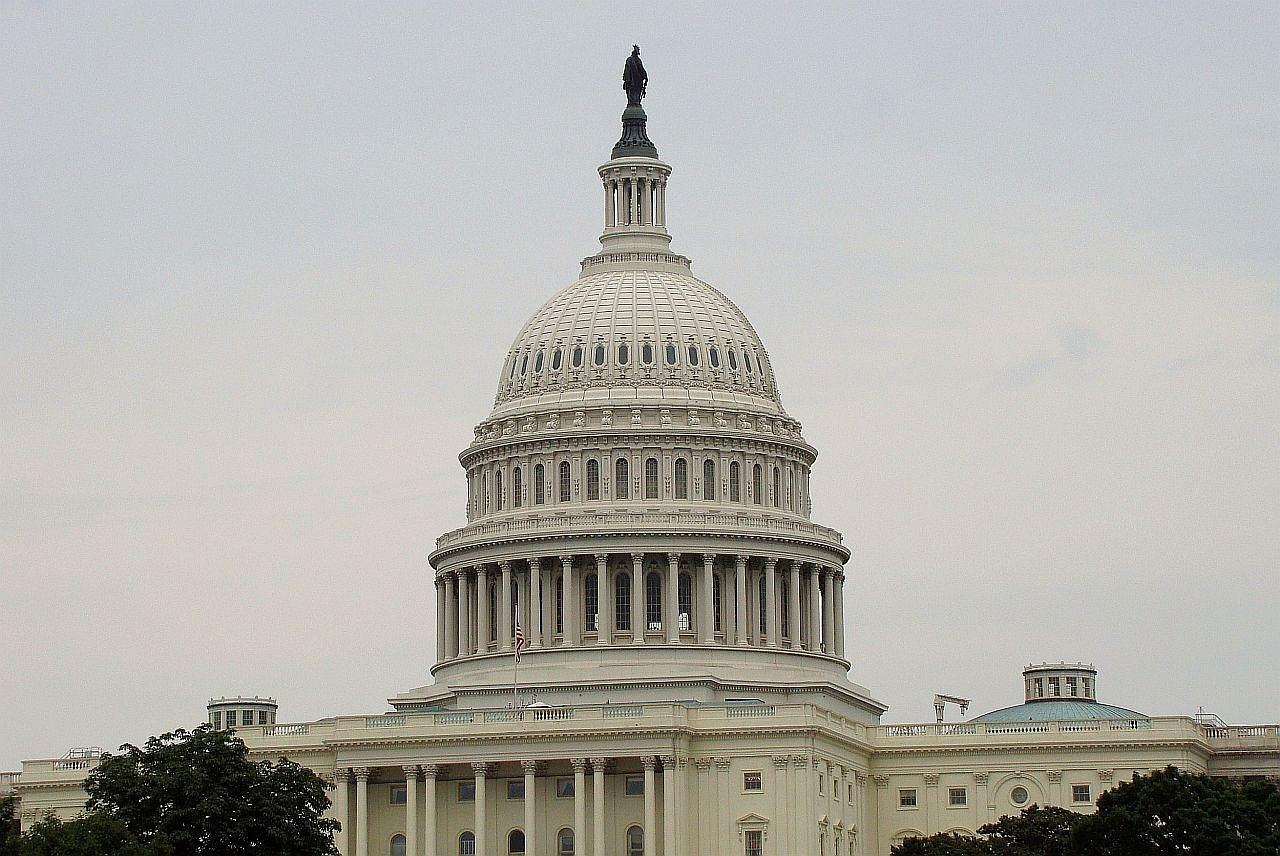
Photo by PublicDomainPictures on Pixabay