
Hello everyone, and welcome back to the blog. Today, we are taking a look at a heartbreaking story coming out of the Indian capital, where urban development, security concerns, and centuries of history have collided in a very painful way for local residents. It is a tale of displacement that leaves behind a quiet, lonely structure and a community trying to piece their lives back together miles away.
In the bustling heart of Delhi, just a stone’s throw away from the prime minister’s official residence, stands the Race Course mosque. Surrounded by piles of rubble, broken concrete, and the debris of settled lives, the pale walls and pointed arches of the mosque remain surprisingly intact. Its courtyard is still lined with green-and-white tiles, but the vibrant community that once gave the place its spirit is completely gone.
Mohammad Wasim, a 50-year-old driver, remembers what used to be. Standing amidst the ruins, he points to an empty spot where his house once stood. According to the facts shared in the report, Wasim’s father was married right there, and decades later, his own daughter celebrated her wedding in the same spot. Wasim and hundreds of other families lived in a patchwork of modest homes tucked quietly between military compounds, exclusive clubs, and sprawling bungalows in Race Course—one of the wealthiest and most heavily guarded neighborhoods in Delhi.
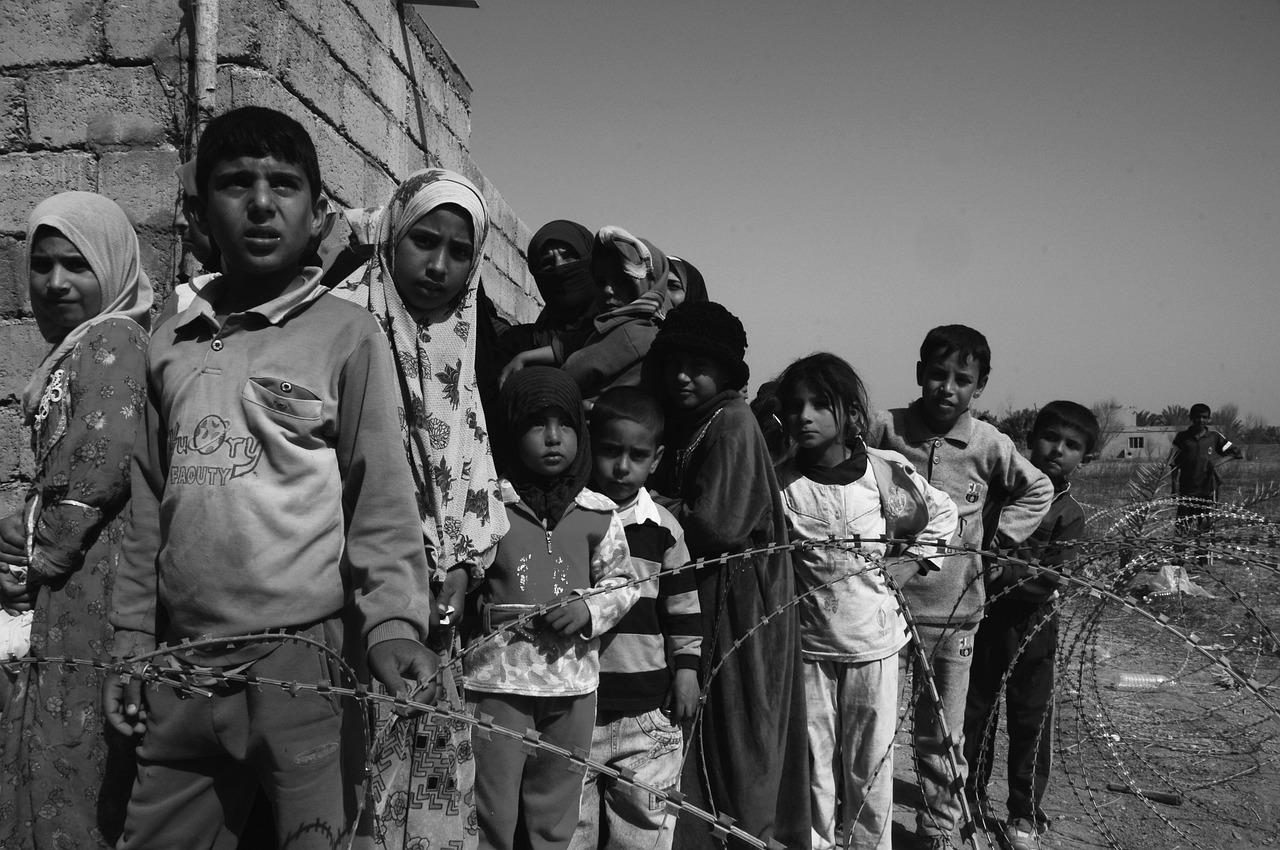
For generations, these residents made their homes here, working as drivers, gardeners, and cleaners in the affluent houses surrounding their settlements. But that routine came to an abrupt halt on October 7. The authorities carried out massive demolitions across three local settlements, stating that the homes had been built illegally on government land. Officials also highlighted pressing security concerns due to the proximity of the houses to sensitive military installations.
As a result, about 717 families were forced to pack up and relocate to Savda Ghevra, a resettlement colony located nearly 31 miles away on the far edges of the city. Before the evictions, residents took their fight to the Delhi High Court. They argued that being pushed so far away from their schools, workplaces, and deeply rooted communities would completely shatter their way of life. Unfortunately, in August, the court ruled in favor of the relocation, taking the government’s security concerns into account and noting that alternative housing options had indeed been provided.
Today, only the historic mosque and a nearby Hindu temple remain standing amidst the destruction. However, the situation for these religious sites is grim. On the day of the demolitions, their water and electricity supplies were immediately cut off. Access to the compound has since been heavily restricted, with guards generally turning worshippers away at the gates, though a few are occasionally allowed inside after pleading for entry.
The legal status of the mosque land is a point of contention. While the government insists it owns the property, mosque authorities counter that the land was officially registered back in 1977 as waqf property—meaning it is land dedicated under Islamic law for religious or charitable purposes. It is also officially listed as a heritage structure. The Delhi Waqf Board states that the mosque is nearly 300 years old, while other estimates place its age between 125 and 150 years.
The Waqf Board has formally written to the authorities, demanding the restoration of water and electricity and expressing deep concern over the future of the heritage site. Meanwhile, a concerned worshipper has filed a separate petition in the high court, fighting against the prayer restrictions and the looming fear of total demolition. On October 29, the government informed the court that it would temporarily halt any action against the mosque for four weeks while reviewing the board’s objections. However, the government strongly opposed restoring access for prayers, citing ongoing safety hazards associated with the demolition work nearby—an argument firmly disputed by the worshippers’ legal representation. The court ultimately declined to intervene immediately and scheduled the next hearing for December 16.
While the ultimate fate of the mosque hangs in the balance, the individuals who once called this neighborhood home are left wondering what can possibly be salvaged of the lives they built. Wasim still makes the journey back to the mosque to pray whenever he can, even though the guards sometimes turn him away. On a recent afternoon, he was one of just four or five worshippers inside the quiet structure, with a loud generator chugging outside to supply temporary electricity.
Another displaced resident, a widow named Rekha, remembers her old colony with profound longing. She used to wash dishes in nearby homes, raise her family, and perform voluntary service at the local Hindu temple. For her, the official term “rehabilitation” feels utterly inadequate. She asks how a life built steadily over decades can simply be uprooted and replanted somewhere else. Since the forced move, she has lost the steady work she relied on, and her 19-year-old son is struggling to find employment. Though she has been given a third-floor apartment in the new complex, climbing the stairs is physically agonizing due to a metal rod in her leg following an operation. She notes that while she technically has a house now, her true home was snatched away.
Urban researchers point out that these harrowing experiences are part of a much larger, recurring pattern of displacement in Delhi. Working-class communities have repeatedly been pushed to the distant fringes of the city simply because they lack formal documents proving legal ownership of the land they have inhabited for generations. Urban researcher Mukta Naik explained to the BBC that such relocations completely sever people from their jobs and social networks, inevitably leading to severe income loss. As families scatter in search of new livelihoods, the informal support systems they once depended on become nearly impossible to rebuild.
The government agencies, including the Delhi housing agency, the local municipal council, and the central land office, did not respond to requests for comment regarding the situation.
Savda Ghevra, where the families were sent, was originally established in 2006 on agricultural land near the border with Haryana state to house people displaced from other parts of the city. When the first wave of residents arrived years ago, they found little more than bare dirt plots lacking basic infrastructure like roads, running water, or electricity. Over many years of struggle, those early arrivals built homes, opened small shops, and fought hard for basic municipal services. By the early 2020s, the population there had grown to an estimated 50,000 people.
Now, the newly arrived families from Race Course have been forced to start that exact same exhausting process. They have traded the lush, tree-lined avenues of central Delhi for rows of nearly identical concrete blocks surrounded by open fields. Life somehow goes on, but much of what sustained these families remains trapped on the other side of the metropolis.
Take Babloo, for instance. Every single day, he leaves his new home at 5:00 AM to take his children via the metro all the way back to their old school in central Delhi, changing trains three times along the way. Once they arrive, he waits out a grueling six-hour window until classes finish by sitting at a tea stall outside his former neighborhood. When he actually has work, his wife makes the long journey instead. Their new apartment is simply too far away to make multiple trips during the school day, and by the time the family finally reaches Savda Ghevra in the evening, it is around 4:00 PM.
Babloo previously worked at a club in Race Course, but he has now had to find work much farther away in Meerut, a town located to the north-east of Delhi. Residents always knew there was a chance they might have to leave, but they had hoped the government would relocate them somewhere close enough to maintain their employment and keep their children in familiar schools. The government maintained that suitable apartments simply were not available any closer to Race Course, pointing to Savda Ghevra’s local schools, dispensaries, and transport links as proof that the area is fully equipped to handle the displaced populations.
However, the existence of these basic facilities offers little comfort to 63-year-old Naeem Khan. His two grandsons suffer from hearing and speech disabilities, requiring specialized care and schooling that he states are completely unavailable in the new settlement. Furthermore, the move has fractured Naeem’s family. One of his sons and a divorced daughter share his tiny one-room apartment, while his two other sons were forced to find housing elsewhere simply because there was not enough physical space.
The heavy toll of the distance falls particularly hard on women. According to researcher Mukta Naik, childcare duties, high transport costs, and persistent safety concerns make long, grueling commutes nearly impossible for female workers. Back in Race Course, the immense wealth surrounding their modest settlements provided small yet vital economic opportunities right at their doorstep.
My Perspective on the Human Cost of Urban Development
Reflecting on this situation, I see a classic, painful clash between grand urban ambitions and the fragile realities of working-class survival. It is a script that has played out in growing cities all over the world, where gleaming modern infrastructure and security protocols are prioritized over the human ecosystems that have quietly kept those very neighborhoods running for generations. When we look at the facts presented—families being uprooted overnight, losing their livelihoods, and being sent miles away to the periphery—it becomes clear that relocation is rarely just about changing an address; it is often an invisible erasure of a community’s entire history.
From where I sit, the most striking part of this story is the profound disconnect between the official narrative of progress and the lived experience of ordinary people like Rekha and Babloo. Governments naturally have to weigh security and land use, but treating urban poor communities as temporary occupants rather than permanent citizens creates a devastating cycle of displacement. Pushing people 31 miles away to the edge of the city doesn’t solve urban poverty; it simply hides it out of sight, forcing families to spend hours on public transport just to hold onto the crumbs of their former lives.
Ultimately, stories like the one unfolding around the Race Course mosque remind us that a city is defined by more than just its high-security zones, wide roads, and historic monuments—it is defined by the people who wake up early every day to sweep the streets, drive the cars, and tend the gardens. When those people are pushed to the margins, the soul of the city goes with them. I can only hope that as the legal battles continue in the coming weeks, the authorities and the courts find a way to honor not just the physical stones of the historic mosque, but the human heritage of the families who loved it first.
Thank you for stopping by to read today’s update. Let me know your thoughts on how growing cities should balance modern development with the preservation of working-class communities in the comments below, and I will see you all in the next post!
source: feeds.bbci.co.uk (www.bbc.co.uk)