
Hey everyone, welcome back to the blog! Today, we are looking at some pretty intense news coming out of Europe right now. If you have been keeping an eye on international headlines, you probably know that young people across the continent are feeling the squeeze, and lately, they are taking their frustrations straight to the streets. What started as major, peaceful demonstrations about everyday economic pressures took a sharp and chaotic turn in several major European cities over the weekend, leaving authorities scrambling to keep the peace.
Let’s dive into what actually happened. It all kicked off on a Saturday when thousands of people gathered for demonstrations organized by a campaign group called Gen Z regelt, which translates to “Gen Z takes charge.” The main grievances driving these crowds were heavy hitters: people are dealing with underfunded schools, tightening public spending cuts, the ongoing pressure of military service policies, and above all, the heavy burden of the German cost of living crisis.
While the daytime gatherings across major hubs like Berlin, Cologne, Hamburg, and Frankfurt were largely peaceful, the atmosphere shifted drastically as night fell. Things got entirely out of hand in Frankfurt, which serves as the financial powerhouse of the country. According to reports from the ground and law enforcement, rioters began targeting shops in the central parts of the city. A spokesperson for Gen Z regelt, Lina Friedrich, had earlier stated that the goal of the movement was to fight for peace, freedom, and better funding for health and education systems, while opposing compulsory military service and demanding a fairer distribution of economic burdens.
However, the night time reality looked very different from those stated goals. Police in Frankfurt had to lock down a large section of the main shopping street. Officials reported that storefront windows were smashed in, and things escalated dangerously when individuals threw Molotov cocktails at emergency workers. In one particularly alarming incident, the windows of a gun shop were shattered, prompting officers to make arrests and seize weapons. Police forces deployed water cannons to disperse the crowds who were attacking emergency personnel with stones, bottles, and fireworks.
The local leadership did not mince words about the violence. Roman Poseck, the interior minister of Hesse state—where Frankfurt is the largest city—pointed fingers at what he described as roughly 100 clearly identified left-wing extremists who had infiltrated the peaceful demonstration. He called the violent turn of events shameful, explicitly comparing the scenes to recent unrest in neighboring France and noting that such tactics should never be normalized or treated as a model to follow.
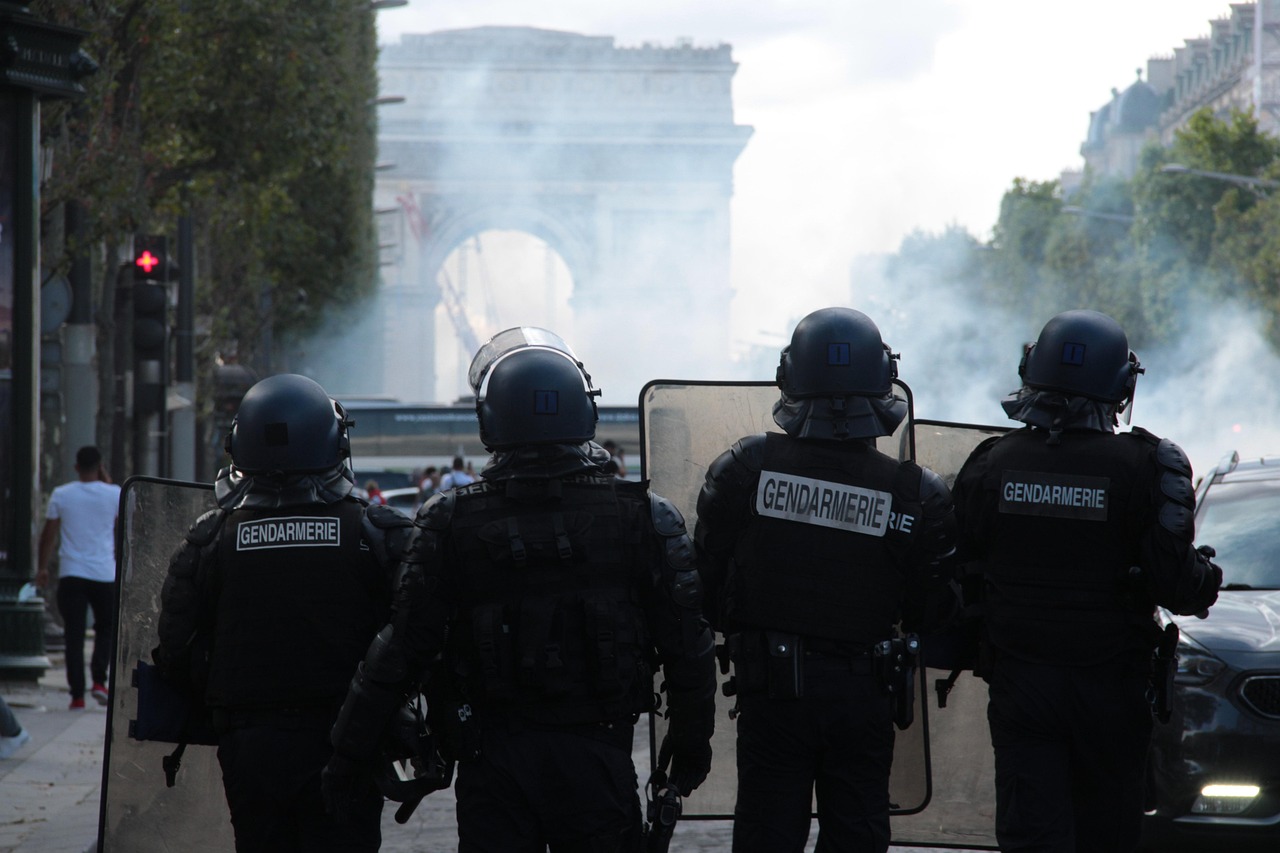
Germany wasn’t the only place experiencing this wave of civil unrest. In fact, these events are part of a much broader European movement. On that very same Saturday, France saw massive turnouts for the third consecutive weekend. Over 320,000 people demonstrated across French cities, demanding immediate action on poor public services, educational infrastructure, and living expenses. Just like in Germany, things turned volatile in places like Toulouse, Lyon, Marseille, and Paris. Law enforcement deployed tear gas, leading to over 500 arrests, while French officials reported injuries among security forces targeted by projectiles and incendiary devices.
The discontent stretches even further across the map. Italy saw clashes between police and demonstrators in Rome and Turin. Meanwhile, in Portugal, police moved in to clear out newly established tent camps following massive marches against a controversial rental bill. Protesters there argued that the legislation would only worsen an ongoing housing crisis, especially given that housing prices have more than doubled over the past decade. From Belgium and Ireland to Spain, Greece, Serbia, and Albania, a new generation of mostly young Europeans is marching, united by shared anxieties over housing availability, education quality, and the rising cost of everyday life.
My Perspective On The European Youth Movement
When looking at headlines detailing broken shop windows, police clashes, and tear gas in major European capitals, it is easy to feel a sense of overwhelming pessimism about the future. It is tragic to see peaceful gatherings hijacked by extremists and to witness property destruction and injuries on both sides. No one wants to see communities torn apart by violence, and the economic pressures that push people to the breaking point are undeniably severe. However, looking past the chaotic imagery of the riots, I see a powerful undercurrent of hope and civic engagement that shouldn’t be overlooked.
What we are witnessing is not just random chaos, but a profound awakening among the younger generation. For too long, young people have been passive observers of economic policies that directly impact their ability to study, work, find affordable housing, and build a secure future. The fact that thousands are mobilizing, organizing, and demanding systemic improvements in healthcare and education proves that they refuse to quietly accept a diminished standard of living. While the methods of a destructive few are entirely unacceptable, the broader movement highlights a passionate, deeply invested youth cohort that cares intensely about the direction of society.
Ultimately, this widespread mobilization serves as an urgent wake-up call for policymakers across the continent. When a generation takes to the streets in such large numbers, it forces governments to listen, adapt, and address long-ignored structural inequalities. If political leaders can channel this raw energy into constructive dialogue and meaningful policy reforms regarding housing, education, and economic fairness, this turbulent chapter could pave the way for a more resilient and inclusive Europe. The path forward is difficult, but the sheer dedication of Europe’s youth to fight for a better tomorrow is an asset we should ultimately view with cautious optimism.
That is all for today’s update, folks. Let me know your thoughts in the comments below about how European cities are handling these widespread demonstrations. Stay safe, stay informed, and we will catch you in the next post!
source: feeds.bbci.co.uk (www.bbc.co.uk)
Photo by HubertdeThé on Pixabay